Sustainability

Balancing Green and Brown in Urban Design

Posted by Dean Saitta on March 22, 2013
Intercultural City, Placemaking, Sustainability / No Comments

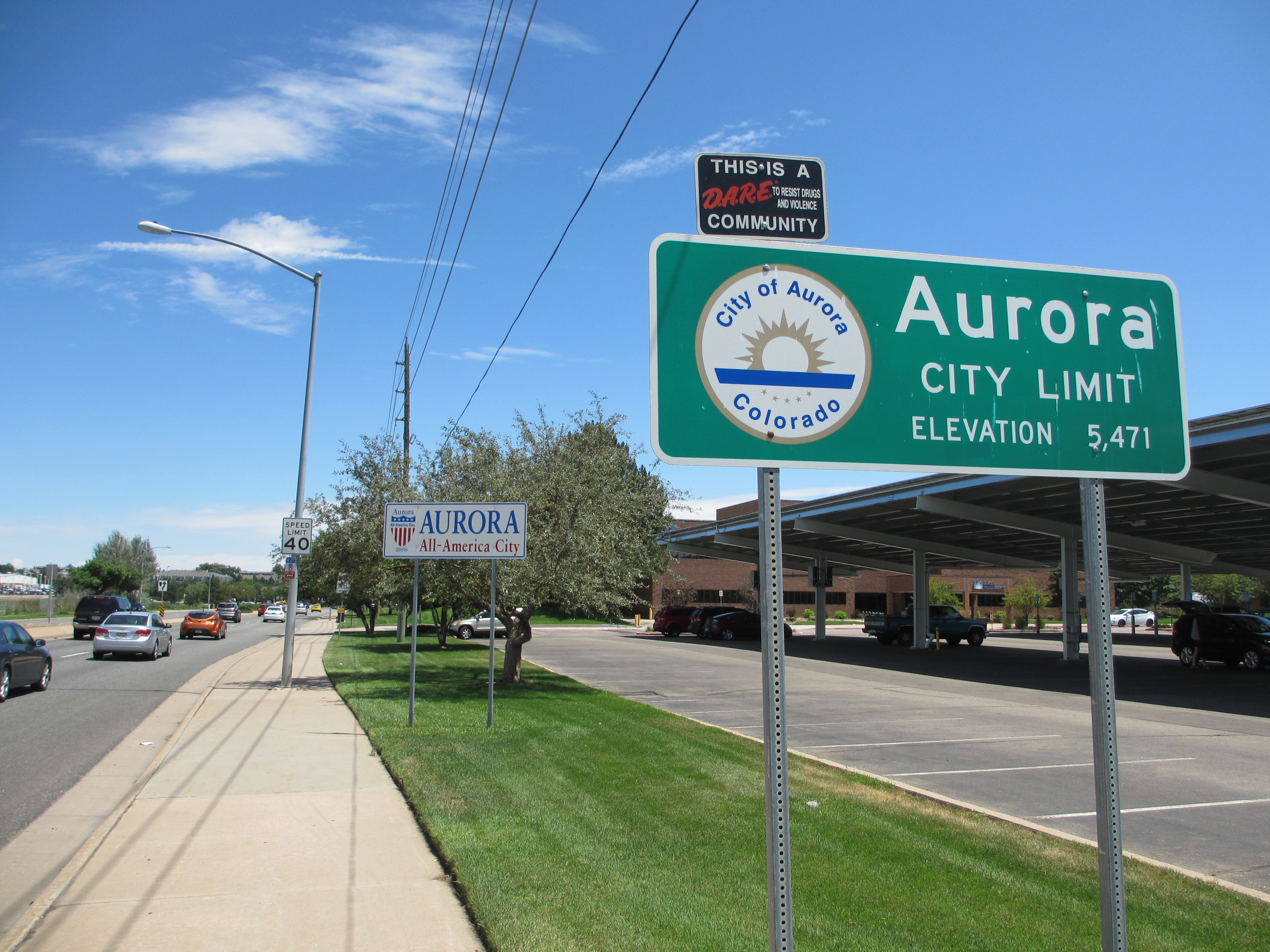
My title is that of a public lecture I gave the other day at the Aurora History Museum. My first speaking visit to the Aurora museum was about underground archaeology at the Ludlow Tent City; this one was about “above ground” archaeology in Denver and its suburbs.

Aurora History Museum (D. Saitta)

Aurora History Museum (D. Saitta)

The lecture was my first opportunity to present, to a group of citizens, some ideas about what Denver area urban planners and architects might consider when designing for environmental and cultural sustainability.  The slide show (posted to the Presentations page of this website) draws on the Intercultural City ethos that informs many of the essays on this blog. It also synthesizes observations made by students conducting original fieldwork for my Culture and The City course.

TalkTitle

Denver Viewed from Red Rocks State Park (D. Saitta)

The lunchtime audience of “brown-bagging” seniors and folks on lunch break from local offices was engaged and animated. They appreciated the idea of designing public spaces to accommodate cultural diversity, even if this meant sacrificing serene, manicured, leafy parks and squares for the messy multi-functionality of “hard plazas” (like the one in Barcelona featured  in the slide show).  They seemed to like the idea that parking lots are not always visual blights and can be important mechanisms for sustaining informal urban economies.  They agreed that the Great Walmart War at the 9th and Colorado infill site in central Denver tragically derailed a potentially fruitful conversation about how corporations and citizens can make common cause to create better and more sustainable urban places.

In short, it was a lively and enjoyable event that reminded me why I love getting out of the ivory tower and into public arenas where you can learn from, and be inspired by, fellow citizens.

A Meditation on Universities, Interdisciplinary Teaching, and Sustainability Studies

Posted by Dean Saitta on March 03, 2013
Sustainability, Urban Studies / 1 Comment

Like many institutions of higher learning, the University of Denver is committing resources to greening our campus and encouraging teaching and research on sustainability. We have a Sustainability Council, a Sustainability Minor, and a nascent Center for Sustainability. Because of my interest in urban sustainability—and to mark the 100th post of this humble blog—I thought I’d reflect a bit on what’s happening on my campus and where we’re going.

1 green_banner.640

The catalyst for this essay was a recent panel discussion about sustainability initiatives on campus. Sponsored by the Sustainability Council, the event kicked off a series of cross-curricular dialogues about sustainability-focused teaching and research at DU. The panelists were from a variety of traditional academic units and professional schools (e.g., Law, Social Work, and International Studies).  The goal was to encourage discussion across disciplines and identify cross-cutting themes for future events, given sustainability’s inherently interdisciplinary character.

The event was both inspiring and depressing. Inspiring, because of the good work on sustainability that’s taking place within the academic units (e.g., on human-animal connections, business ethics and sustainability, global health). Depressing, because a common note struck by speakers and audience members alike is how hard it is to do substantive interdisciplinary team-teaching (i.e., something more than the typical dog-and-pony show) about any topic across academic units at DU.  Indeed, this was the main takeaway message of the event. The obstacles are structural, relating to the demands that individual units make on their faculty but also—perhaps more importantly—to the system for crediting team-teaching across units. Several participants noted that faculty with interdisciplinary teaching interests have to work in the “interstices” of what, at DU, is a very traditional academic structure.  This certainly can produce some good results, as the panelists demonstrated.  But a scattershot approach is no substitute for a broader institutional commitment that would better value this work and perhaps make DU more competitive in attracting top-flight faculty and students having interests in sustainability.

Academic territoriality is another serious obstacle.  Several years ago my colleagues within the arts, humanities and social sciences sought to create an Environmental Studies program.  They had a fully-justified proposal, courses ready and waiting, and participation pledges from faculty in a critical mass of departments. But the proposal was squashed because academic deans feared competition that would draw off students from the already established Environmental Sciences program. We’re trying again this year to get something going in the area of Environmental Humanities or Eco-Humanities.  However, the ancient survival impulse to claim and protect turf is apparently still alive and well on campus.  Last year DU’s Department of Geography received approval to change its name to the Department of Geography and The Environment.  It’s not clear how this was accomplished; it could be that all it took was submission of a self-interested request to the university’s Board of Trustees, a governing body that’s un-populated by professional scholars. At any rate, this is astonishing stuff because I thought we were beyond seeing the “The Environment” as an object of study to be owned by particular academic departments and divisions.  It also runs counter to the widespread recognition that sustainability—as something that’s intimately wrapped up with “The Environment”—is an inherently interdisciplinary concept. Anthropologists sometimes get territorial about the study of “Culture”, but I think we’re smart enough to realize that “Culture” is a complex phenomenon on which multiple disciplines can shed bright light.  “The Environment” is similarly complex, beginning with the fact that it is cognized and used differently depending on cultural context and history.  Any comprehensive understanding of human-environment relationships and, certainly, any effort to specify sustainable “best practices” for managing human-environment relationships requires exposure to theories and methods that span the natural sciences, social sciences, arts, and humanities.

2 Phoenix.landsat.800

Phoenix: A Model of Unsustainable Urbanism?

Promotion and tenure criteria can also impede the development of interdisciplinary teaching and research. Like many  institutions, a “star” mentality rules at DU, with the single-authored monograph and peer-reviewed journal article serving as coin of the realm.  The quest for star status can produce a certain insularity.  Over the last 25 years I’ve seen some very fine collaborative scholars and scientists leave the university because they ran afoul of the star system for evaluating faculty talent (for a particularly egregious case, see here). Others have left because of academic climate issues, like the particularly talented ecologist who, at a York University (Toronto) workshop on comparative urbanism in 2008, riveted a roomful of participants with a discourse on the importance of wildlife corridors to sustainable urban environments.  Stories like these relate to the challenge of building a faculty for 21st century interdisciplinary work on sustainability.  I’m not convinced that my institution knows how to meet that challenge, nor thought very much about it. Having star academics (whatever that means) in the fold is important, but so too is having the team-players who, because of their presence, make the whole much greater than the sum of its parts.  And it seems that holism and balance in all areas of academic life is what any institution looking to gain street cred in the area of sustainability should be aspiring to achieve.

Even the structure of the curriculum itself can hamper efforts to teach about sustainability.  One place in DU’s curriculum where team-teaching about sustainability might flourish is our Common (General Education) Curriculum.  The “Advanced Seminar” piece of that curriculum invites interdisciplinary and experimental courses.   However, the established requirement for these upper-level courses is that they be writing intensive.  This can work against courses with sustainability themes that might be better taught with pedagogies that are field or lab intensive like, say, a course on urban permaculture.

4 SLC.landsat640

Salt Lake City: The Next Big Thing for Modeling Sustainable Urbanism?

The parting shot to the Sustainability Council’s panel  discussion was a comment from one participant who declared that DU is positioned to do some “amazing stuff” in the area of sustainability.  I completely agree, but I don’t see how we can do this stuff without some financial and academic restructuring.  How hard can it be to produce a budgetary and credit-allocation model that actively supports interdisciplinary team-teaching across the traditional units and the professional schools?  Or, to structure a curriculum that allows pedagogy—whether writing-intensive, field-intensive, lab-intensive, performance-intensive, or some other intensive—to follow subject matter and course goals rather than being stipulated a priori?  Or, to combine programs with sustainability emphases—environmental science, eco-humanities, urban studies–under a single comprehensive umbrella?  We don’t have to go so far as to create a separate School of Sustainability Studies like they have at Arizona State University, although the ASU model of academic structure is producing some really interesting teaching, research, and public outreach initiatives. Something along the lines of the University of Utah’s program in Environmental and Sustainability Studies would do.  This program brings together scientific, humanistic, historical, and cross-cultural approaches to understanding the human-nature relationship. However, it’s not clear whether the University of Utah is doing better than any other institution in supporting interdisciplinary team-teaching or building a faculty for 21st century work on sustainability.

3 Denver_Colorado.aerial

Denver: A Natural Laboratory for Evaluating Models of Sustainable Urbanism

It’s probably not a coincidence that western cities provide the geographical setting for this progressive sustainability work.  Phoenix is a favorite poster child for unsustainable urbanism.  But that makes it an exquisite natural laboratory for thinking about, and testing, ideas about how to do things differently.  Salt Lake City is currently poised to get some run as a model of urban sustainability given that the Congress for the New Urbanism meets there later this year.  If some CNU leaders have their way, we could soon be talking up the 21st century relevance of 19th century Mormon town planning.  Denver has accumulated plenty of credibility as a place to watch for trying out different approaches to creating sustainable urbanism.  It‘s a shame that Denver’s university is not leveraging our faculty talent and unique location to create the amazing program in sustainability studies that, given a little structural and paradigmatic change, lies well within our reach.

Retrofitting Dead and Dying Suburban Places

Posted by Dean Saitta on February 07, 2013
Intercultural City, New Urbanism, Placemaking, Sustainability / No Comments

The College of Architecture and Planning at the University of Colorado at Denver is hosting a spring lecture series on “Design in the Public Interest & Alternative Forms of Practice.”  Last week Ellen Dunham-Jones kicked things off with a lecture on “Retrofitting Suburbia.“ She essentially reprised and updated the arguments presented in her book with June Williamson that’s now in a revised edition.  This included a comprehensive smart growth rationale for retrofitting suburban spaces and numerous examples illustrating three distinctive retrofitting strategies that Dunham-Jones referred to as re-inhabitation, re-development, and re-greening.

Lecture Series Spring 2013_website

Dunham-Jones’s rationale for smart growth retrofitting of suburbia is commonsensical and compelling.   Suburbia contains lots of vacant and underperforming spaces—to the tune of over 1 billion square feet. Climate change requires that we decrease the carbon footprint of these areas by investing in walkability. Incentivizing walkability will also help address America’s serious health problems around obesity. The 40% greater cost of municipal services in sprawling suburbs compared to urban cores, combined with economic recession and growing suburban poverty, recommends retrofitting for greater density and mixed use. There’s also an emerging cultural shift that’s best met by retrofitting for density and walkability: 77% of Millennials and 75% of Aging Baby Boomers want a more “urban core” lifestyle that has desired amenities within walking distance.  All of this (among other things) makes traditional first ring suburbs, given that they are now more central than ever before, especially prime spots for smart growth and transit-oriented retrofitting.

RetroFitSubUpdated.640

Examples of promising suburban retrofits now number in the six hundreds, up from the 80 or so examples that Dunham-Jones and Williamson drew from in the first edition of their book.  Re-inhabitation is exemplified by the widely-heralded conversion of an abandoned Walmart store into a public library in McAllen, Texas. Re-development of a “zombie subdivision” into a residential project including Habitat for Humanity townhomes serving low income people distinguishes Walkers Bend in Covington, Georgia. Re-greening takes a nice turn at  Columbus (Ohio) City Center Park.  Dunham-Jones also reaffirmed her favorable opinion of Belmar, a Denver area mall retrofit that serves as an extended case study in her book and that we previously discussed here. For Dunham-Jones Belmar has good construction, great connectivity, and sufficient variation in building styles to create a successful “sense of place.” In fact, Dunham-Jones applauded Denver for being a leader in regional mall retrofitting—we’ve “figured it out”—given that 8 of 13 regional malls have already been retrofitted and more are being retrofitted as we speak.

CCE.77.640

CityCenter Englewood (D. Saitta)

Denver’s several examples of suburban mall retrofitting offer an opportunity for evaluating how these places resonate with Millennial generation tastes.  I asked students in my Fall 2012 Culture and The City course to evaluate three Denver suburban retrofits–Belmar, CityCenter Englewood, and the Streets at SouthGlenn–and pick the one they would live in if given choice.  Only 20% chose Belmar, suggesting that they don’t share Dunham-Jones’s enthusiasm for this particular retrofit.  Twenty percent chose the Streets at Southglenn.  Interestingly, 60% went for CityCenter Englewood.  Among the reasons: the development’s investment in outdoor sculpture, public library and art museum, and greater residential affordability.  Students also appreciated CityCenter Englewood’s Light Rail transit connectivity (Belmar’s eight connecting bus lines did very little for them).  In this respect my students disagreed with Alan Ehrenhalt’s assessment in his book The Great Inversion (the “Urbanizing the Suburbs” chapter, page 215), that CityCenter Englewood “turns its back on the light rail station and on transit oriented development in general.”  Students appreciated the greater opportunity for encountering ethnic diversity at CityCenter Englewood, which some students explicitly linked to the nearby presence of value shopping retail outlets like Walmart. Walmart is apparently not an issue for these students as it is for citizens of their parent’s age living elsewhere in the city.  In short, CityCenter Englewood struck my students as a more “authentic” urban place than the relatively more artificial developments of Belmar and Streets at SouthGlenn.  Their experience in, and evaluation of these places was very different from that of the professional opinion-shapers.

Mother with Child, CityCenter Englewood (courtesy Mengye Liu)

Mother with Child and Outdoor Sculpture, CityCenter Englewood (courtesy Mengye Liu)

Dunham-Jones ended her talk by noting several challenges facing the contemporary city.  Cities must dis-incentivize sprawl.  They have to do “instant urbanism” much better as concerns the visual interest and quality of design.  Perhaps the biggest thing to “figure out” is how to make retrofits affordable and thereby prevent the displacement of poorer populations.  Several of the cases Dunham-Jones presented looked very good in theory but in practice they only produced more gentrification.  I would add that it might also be wise for suburban and urban retrofitters to do better testing of design concepts with the target populations that they intend to serve.

Millennial Urbanology

Posted by Dean Saitta on December 03, 2012
General, Sustainability, Urban Studies / No Comments

Like the question about what constitutes good urban placemaking, the question about the lifestyle tastes and desires of the particular demographic that creative placemakers seek to attract—the Millennials—is a major preoccupation for urbanists.  Yesterday’s Denver Post, for example, contains an op-ed piece by Neal Peirce that notes the widely reported Millennial desire for “urban communities with active street life, entertainment, and stimulation.”  Peirce uses Jeff Speck’s recent book Walkable City as an entry point for arguing that the cities we need to create must be—you guessed it—walkable, bikable, green, and public transit-oriented (for a summary and review of Speck’s book, go here).

One of the advantages of teaching urban studies to a college audience is that we can take something of the pulse of what Millennials want in urban places.  In future posts I’ll report what I learned about Millennial tastes this past academic term from having my students analyze contemporary urbanism in Denver. Denver is one of the cities—along with New York, Boston, Chicago, San Francisco, Portland, and Minneapolis—that  Peirce says is making good progress toward creating active and sustainable urban environments (see also here).

The in-class preparation for urban fieldwork includes playing and discussing the BMW Guggenheim Lab’s Urbanology game, as well as discussing films like Gary Hustwit’s Urbanized [Note: Urbanized took us three class meetings to finish watching because of the animated discussion it stimulated. We kept coming back to its themes throughout the course of the term. I should write something up about this soon]. The Urbanology game asks players to make choices about urban issues, producing some quick findings based on the choices. The player assumes the role of a decision maker and answers questions to determine the priorities of his or her city. By answering “yes” or “no” to 10 questions like “Will you double the cost of public transport to fund its conversion to a carbon-neutral system?” or “Will you pay for a free bike service in your city?” players build a future city that best matches their indicated desires and needs. Then, the player is told what real city most closely approximates their values as an urban decision-maker.

In a previous post I discussed the results of Urbanology game-playing by my Fall 2011 class.  The top two values for that group of Millennials were Livability (investments in security, recreation, and individual comforts), mentioned by 41% of the students, and Health (investments in general physical well-being) mentioned by 26%.  Sustainability was the third most frequently mentioned value, by 22% of the students.  These results would seem to be consistent with Millennial tastes as defined by Pearce and others.  Perhaps predictably, these Millennial values differed from my own Baby Boomer values. In the twenty times I played the game Sustainability (investments in “greening” the city) was identified as the top value 30% of the time, with Lifestyle (investments in arts, sports, culture, and tourism) a close second at 25%.  At the time I explained this Student-Instructor difference by appealing to generational factors: at this point in my life I’m much more interested in the quality of the urban community that will be inherited by my middle school-aged son, and much less interested in the individual personal comforts and amenities we might reasonably expect to be of great interest to college-age Millennials. Curiously, however, Student and Instructor values produced the same list of real cities, albeit in a different rank order.  The top city for students was Berlin with 37% of the mentions, followed by Toronto with 33% and Shanghai with 26%.  My list was topped by Shanghai with 25% of the mentions, followed by Berlin and Toronto with 20% each.

Game-playing by my 2012 class of Millennials generated the same three cities, but in a slightly different order.  Berlin got 38% of the mentions, followed by Shanghai at 35% and Toronto a distant third at 23%. Interestingly, the urban values generating this list in 2012 were decidedly different from 2011.  In 2012 Sustainability was identified as the top value by 31% of the students, followed by Livability at 19% and Lifestyle by 15%.   I played the game another ten times and the results were consistent with the first time I played. Shanghai is still my top city with 30% of the mentions, with Sustainability and Lifestyle sharing top-spot value honors with mentions of 30% each. I’m not sure what to make of these numbers.  Minimally, they suggest that my values as an aging Boomer are understandably stable, while those of my young Millennial charges—also understandably—are a bit more in flux.  The latter might imply that we shouldn’t be too confident of our ability to predict what Millennials want in an urban setting.

For reasons discussed in my original post, results of the Urbanology game can leave you scratching your head.  They raise student (and Instructor) suspicions that the game is “rigged” in a way that guarantees certain results. Yet at the same time students really enjoy playing it.  One student comment on the anonymous end-of-term course evaluation captures, I think, the consensus of the class about Urbanology’s virtues:

The Urbanology game fit the class well. It was a useful tool and timed well as it was used early in the course, and was very fun and stimulating.

The game clearly puts students in touch with compelling urban questions and conundrums that they’ve never thought about before, as well as with their own personal values and politics.  They express a near unanimous desire to see the game developed in such a way as to add more complexity, context-sensitivity, and nuance (i.e., getting away from having to answer “yes/no” to difficult questions).   If nothing else the game is  a terrific conversation starter about the kinds of choices and compromises that have to be made in designing and developing a city.   More bankable insights about what Millennials want, however, come from putting  them into the field to study what urban planners and architects are actually doing with infill sites and public spaces like urban parks.  More on that to come.


Imagining Aerotropolis

Posted by Dean Saitta on September 24, 2012
General, Sustainability, Urban Studies / No Comments

Franco Minganti

It was a pleasure to welcome Franco Minganti, Professor of American Literature at the University of  Bologna, to my campus last week. Franco is the European-side Co-Director of a European Commission/United States Department of Education curriculum development grant awarded to the Universities of Denver and Bologna, along with our co-partners Portland State University and the University of Nottingham.  The grant sponsors exchanges of faculty and students between the United States and Europe to study issues in global citizenship and urban sustainability. While visiting DU Franco participated in Italian language and literature classes, seminared with students in my Culture and The City course, and gave a public lecture to students and faculty.

DC-4 Passenger Plane Flying over Manhattan (1939)

Franco’s public lecture, titled “Icarus and Daedalus,” explored the relationship between flight, architectural design, and urban planning.  He explained the intimate relationship that was forged between flight and urban design in the period between the World Wars.  Flight in the inter-war period was framed as an urban experience.  Historical photographs from the period show how the city served as backdrop to, and a prop (no pun intended) for glorifying the activity of flying.  Images juxtaposing buildings and aircraft inspired architects and planners to go vertical, and fueled the 20th century’s “skyscraper ethos.”  Franco noted that the work of Le Corbusier was also instrumental in promoting verticality. Le Corbusier waxed poetic about how aerial photographs changed our perspective on the city and added a “third dimension” to architecture (M. Christine Boyer further develops this theme).  The photos also inspired him to contemplate the effects that humans have on nature and landscape. Franco thus reaffirmed the truth of Dan Solomon’s remarks at this year’s Congress for the New Urbanism (link to video is available here) that there are “many Le Corbusiers” other than the one we’ve come to know via the prescriptive Athens Charter or the sterile modernism of his many admirers and followers.

Skyscraper Airport for City of Tomorrow (Nicholas DeSantis, 1939)

In the Q&A following Franco’s lecture a colleague noted that today’s interest in aerotropolis as advocated by John Kasarda (including the serious interest being shown by politicians and developers here in Denver) mirrors the Inter-War period’s fascination with flight and urban planning.  But it also inverts the relationship between cities and flight in a potentially unhealthy way. In the 1930s the airport was premised on the city.  Airports were imagined to occupy the rooftops of buildings, as in Nicholas DeSantis’s famous 1939 drawing for Popular Science.  Today, the advocates of aerotropolis premise the city on the airport. As Michael Powell notes in his New York Times review of Kasarda’s book, aerotropolis not only contains a state-of-the-art airport but also:

…customized transportation links, fine restaurants, designer shopping, and nearby corporate suburbs connecting workers umbilically to the global marketplace. The aerotropolis…represents not just a redesign of travel but a vital new economic paradigm.

Model for Incheon International Airport Business District, South Korea, by Fentriss Architects (D. Saitta)

This vision of aerotropolis means that travelers never need to visit historic downtowns, nor experience firsthand (and in all their messiness) the local cultures and heritages that comprise the city as it really exists. Instead, travelers can experience sanitized versions of culture and heritage as simulacra within the aerotropolis.  Networked aerotropoli also promise “frictionless travel” akin to that supported by the high speed train systems already linking (or proposed to link) cities in Europe and elsewhere, usually over great public protest (Gary Hustwit’s film “Urbanized” features the controversy over Stuttgart 21, and when I was in Bologna last spring graffiti condemning Treno Alta Velocità was everywhere).  Frictionless travel can have not only steep social and environmental costs, but it can diminish the experience of travel in “inter-urban” areas that are bound to go through some interesting changes as the planet rapidly urbanizes.

Anti-TAV Graffiti, Piazza Giuseppe Verde, Bologna (D. Saitta)

Michael Powell notes that the aerotropolitan vision of a more frictionless future lacks “something like a soul.”  Wall Street Journal reviewer Wayne Curtis echoes this sentiment, describing the vision as  “dispiriting.”  Curtis goes on to suggest that Kasarda’s popular book:

…will no doubt do for airport cities what Joel Garreau and his “Edge City” did for suburban office parks and shopping malls two decades ago: It will re-locate the center.

Today, many of these relocated centers are not holding.  Some are being retrofitted.  In fact Edge City retrofitting could be the 21st century’s version of 1960s style “urban renewal,” meaning that we’ll end up wondering what we were thinking when we built this stuff in the first place.  Thus, advocates of aerotropolis in Denver and elsewhere should be careful what they wish for.

Bologna Debriefed: Reflecting on “Contours of The City”

Posted by Dean Saitta on May 09, 2012
General, Sustainability, Urban Studies / No Comments

I’m just back from the “Contours of The City Conference” in Bologna, organized by the University of Bologna’s Laboratorio di Ricerca Sulle Città.  It was all good: terrific hosts, stimulating company, an elegant meeting venue, and great cuisine.

The conference honored Giovanna Franci, one of the co-founders of the Laboratorio and the  European side co-director of our Atlantis project until her death in 2009.  An original and interdisciplinary thinker, Giovanna received some fitting tributes from colleagues, including Umberto Eco who praised her for serving as an “ambassador of Italian culture in barbarian countries.”

The conference was small and intimate.  The sessions were sequential so attendees could hear every presentation.  There were sessions on urban destruction and regeneration, urban “mapping” (in both its physical and ideological senses), urban sustainability (including problems around fear and security), and representations of the urban (specifically, Venice, Paris, London, and some other cities).  A variety of disciplinary and  interdisciplinary perspectives were on offer.  Most presentations were in English and the remaining few in Italian.  I was a participant in the session on destruction and regeneration, and I’ve posted my talk on “Urban Imaginaries and American Infill” to the Presentations page of this website.  It’s also available here.  All presentations will be published in book form by the Laboratorio later this year or early next.  This will be the third book to emerge from Laboratorio events.  The first is a very handsome volume on Looking at The City in Transformation.  The second will deal with Brasilia.  The Laboratorio’s list of past and future events and conferences is impressive (full disclosure: I’m a member of the Laboratorio’s Enlarged Scientific Committee).

Conference Meeting Room: Capella Farnese, Palazzo d'Accursio (D. Saitta)

A few presentations directly related to themes explored on this blog and also spoke to each other in interesting ways.  I’ll mention just a couple to give a sense of range. Dushko Bogunovich (Unitec Institute of Technology, New Zealand) spoke on “The City and The Crunch: Contours of a Pending Disaster.”  Like many other urbanists, Dushko predicts an impending “perfect storm” for cities wrought by climate change, population growth, resource depletion, and biodiversity loss.  To weather the storm we must change our collective institutions (what Dushko terms “groupware”), individual behavior (“software”), and technology (“hardware”).  One of Dushko’s points is that low density urbanism is not necessarily a barrier to a sustainable future if it is resilient.  This contrasts with some significant current thinking about American urban sustainability.  Dushko also stressed that what we do in our educational institutions will be key to addressing the emerging crisis; specifically, we need to rethink dominant paradigms in town planning, urban design, and civil engineering.

Guido Moretti (a Bologna-based urban planner and engineer) picked up on some of these points.  He struck a more hopeful note in a very interesting speech (translated for me on-the-fly by Elena Lamberti, for which I’m extremely grateful!) on “Protecting Cities.”  The speech examined cities in the Islamic tradition.  Signore Moretti detailed some characteristics of the often secluded “medina” that spring up, and thrive, in surroundings that present severe challenges of extreme heat and scarce water.   The medina embody knowledge, accumulated over thousands of years, about how to plan and build in such environments so as to guarantee not only survival but also an intense, productive, and secure social life.   Streets are lively, welcoming areas of socialization and commerce.  Towers, domes, patios, underground canals, fountains, reflecting surfaces, and other elements of infrastructure harvest water from desert winds and sands and thermo-regulate the city.  In Signore Moretti’s words, the Islamic medina “represents a useful and topical reference point with respect to our wastefully expensive and negligent modernity.”   They provide lessons in appropriate and sustainable urbanism.  I’d argue that such reference points and lessons, along with the paradigmatic rethinking mentioned by Dushko, should be a vital part of any progressive curriculum in contemporary urban planning and design.

Paris Street in Rainy Weather (Gustave Caillebotte)

Finally, several scholars gave presentations dealing with the flâneur –the writer, poet, intellectual, and assorted others who observe city life by walking among the crowd.  Although I assign a bit of John Gay when I teach study abroad in London, prior to this conference I hadn’t thought much about what the literature on flânerie could contribute to understanding and regenerating the city.   I certainly learned from the presenters that there’s significant debate about how to define and deploy the concept of flâneur in studies of the city.  Those debates notwithstanding, I was struck by the suggestion of Giampaolo Nuvolati, an urban sociologist at the University of Milan, that we might produce better urban planners—and thus better contexts and settings for conducting urban social life—if we require our students to research, and experience the city as, flâneurs.

Included in the conference agenda  were tours of the art  collections of the Pallazo d’Accursio and the Pinacoteca, and  two intermezzos consisting of readings on “Imaginary Cities.” The conference ended with a screening of the cult film Koyaanisqatsi, which I’m embarrassed to admit I saw for the very first time given that in an earlier life I researched and wrote about the Ancestral Pueblo Indians, including ancestors of the Hopi and Zuni.  The film certainly provided an appropriate end–and a compelling challenge–to a conference of urbanists dedicated to analyzing the quality, pace, and sustainability of urban life.  Another positive outcome of the conference was meeting, through my friend and colleague Gabriele Manelli (a Research Fellow in the University of Bologna’s Department of Sociology) some other scholars doing interesting research on urban poverty, homelessness and the built environment.  More on that to come…

Palazzo d' Accursio and Piazza Maggiore (D. Saitta)

Watering the Cosmopolis

Posted by Dean Saitta on April 18, 2012
Sustainability, Urban Studies, Water and The City / No Comments

I use the concept of cosmopolis in Leonie Sandercock’s sense, referring to a city that’s developed in ways sensitive to cultural diversity and its wider societal benefits (e.g., enhanced vitality and creativity). In a recent post I noted that the sessions devoted to “Wilderness City” water planning at the Rocky Mountain Land Use Institute’s 2012 Conference seemed to take as self-evident the meaning of terms like “public”, “values”, “housing” and, especially, “culture.” Proposed solutions to urban “hydro-sustainability” problems were informed by a Western worldview that sees water as a scarce economic good or commodity.  Many of the discussions were framed in terms of white, middle-class consumer values and behavior, and the settlement preferences of Generation X and Generation Y.  (Some of the RMLUI conference talks and slide shows are posted here).    In short, it  wasn’t clear that conference presenters were thinking about the city as a cosmopolitan enterprise.

Resources can be valued on something other than economic, utilitarian grounds, and urban demography can be described in terms other than Gen X and Gen Y.  It’s an anthropological taken-for-granted that cultures value and assign meaning to water differently.  For many cultures water is a spiritual as well as an economic good.  For some it’s a basic human right.  Minimally, water is integral to many if not most domains of society.  The different meanings and structural relationships of water need to be recognized by urban planners and basic service providers.  Daily household demands for water are also cross-culturally variable.  Thus, it’s problematic to assume that any particular pattern of water consumption is “typical”  for an urban population generally.  Water management issues are as much cultural—or intercultural—as technical.   While particular Non-Western notions of water as sacred can easily dovetail with a Western ethos of environmental sustainability, particular regulating strategies like water metering, recycling, budgeting, etc. can conflict  with particular cultural values identifying water as sacred and a basic human right.  Certainly, management strategies like differential pricing based on intensity of use can easily discriminate against some cultural groups and contradict broader civic commitments to  tolerance and inclusion.

Ritual Bathing in the Ganges River, India

Interest in the cultural values that shape water use has been growing since at least 2000.  In that year UNESCO organized a session on “Water and Indigenous People” at the 2nd World Water Forum at The Hague.  The organizing theme for the 3rd World Water Forum in Kyoto in 2003 was “Water and Cultural Diversity.”   Even with these significant interventions the Cultural Diversity and Water Sustainability “Session Situation Document” for the 5th World Water Forum in Istanbul in 2009 noted that “interdisciplinary and systemic analysis of the relationships between cultural diversity and water, and their implications for sustainable management of water resources, are still lacking.”

Still, there’s been some notable work establishing the difference that culture makes in affecting water use.  A collection of case studies from the Environmental Evaluation Unit at the University of Cape Town–A Desktop Study on the Cultural and Religious Uses of Water describes various rituals and ceremonies in traditional African religions as well as religions like Islam and Hinduism in which water plays a central role.  Some of these rituals require facilities for water pooling. In other ceremonies water has to be running.  In still others the water must be pure and neither tap nor recycled waste or “grey” water will suffice.  Some of these rituals clearly have implications for urban design and architecture.  Interestingly, the report’s authors note that these rituals and ceremonies have been gaining popularity in urban as well as rural areas. Thus, the widely noted world-wide migration of people from country to city is not likely to change cultural practices involving the use of water.

Faucets for performing ritual ablutions, Istanbul

London–the quintessential cosmopolis–looks to be ahead of the curve in researching cultural diversity and water use in ways that can inform management decisions.   A 2006 paper reporting studies of water flows in District Metered Areas (DMAs) in number of British cities noted “startling differences” in water use patterns that are related to religious and cultural practices.  Characteristic patterns are found principally in Jewish and Muslim communities.  For example, there’s a Jewish peak on Friday afternoon in anticipation of Shabbat.  Within Muslim communities intense washing precedes daily prayers, especially during the month of Ramadan.  Prescriptions in Islam against wasting water align with Western conservation values but there are clearly times when unusual amounts of water must be available for various practices.  The importance of using running water in a cultural practice of “washing up” is also a characteristic of Hindu groups. In this case, however, the practice links not to religious belief but rather to culturally-inscribed dietary practices: the high fat and oil content of Indian cooking.  In short:

The overwhelming evidence is that religion [and culture generally] has a fundamental bearing not only on how people use water but also on how they think about water. The overall conclusion is that it would be extremely unwise to exclude religion or ethnicity as parameters in any further research into understanding domestic water demand…Understanding such fundamental differences caused by religious practice may be critical to the planning and design of network water systems.

Hindu ritual involving water in Alagarkoil, near Madurai, Tamil Nadu, India

A 2007 report– Cultural Diversity and Sustainable Water Management in Greater London: The Research Agenda–  summarizes and extends work like that described above.   It’s very aggressive in critiquing the implicit assumption of a “white, Christian norm” of water consumption that far too often (and perhaps unconsciously) informs water management strategies.  It’s likely that such a norm also pervades other assumptions about, say, cultural standards of cleanliness.  While there are some  clear convergences between “West” and “Other” in the ways that water is valued, the report concludes that there’s “little to suggest that valuations of water in any faith systematically translate to a tendency to water conservation.” Effective and sustainable  demand management strategies require beginning with diversity in cultural identities and values, and especially with diversity in the everyday practices, habits, and routines of the consuming population.

Water management for urban sustainability in Cosmopolis–like management of the built environment generally–must accommodate cultural diversity. If it doesn’t it risks ensuring that urban and exurban infill developments remain enclaves for middle class whites; i.e., homogenous communities that are conceivably “gated by other means.”

Water and The Wilderness City

Posted by Dean Saitta on March 06, 2012
Sustainability, Water and The City / No Comments

My title comes from that of the Rocky Mountain Land Use Institute’s 21st annual conference held last week at The University of Denver’s Sturm College of Law.  “The Wilderness City: Nature, Culture, and Economy in the Next West” was framed in terms of the  following theme:

The Rocky Mountain West is characterized by majestic peaks, rolling prairies, rugged plains and vast open spaces. At the same time, the West is home to rapidly growing cities like Denver, Las Vegas, Albuquerque, Salt Lake City, Phoenix and Boise, as well as countless small towns trying to remain viable in an increasingly urbanizing region. Interestingly, as urban centers continue to grow, they are seeking to reconnect their local cultures and economies to what remains of their native ecology…“Wilderness Cities” like Vancouver, Canada blend the wild and the urban seamlessly, with skyscrapers and industry nestled up against rain forests, killer whales and coastal mountains. How can a Wilderness City model and other “green” development approaches not only make Western communities vibrant economic centers but also strengthen our connection with the land?

My schedule permitted attending the conference for just one day. I went to two sessions on water that were relevant to an Institute for Enterprise Ethics research grant that I have with colleagues in DU’s Daniels College of Business.  The theme for the water sessions was pitched pretty simply:

The Rocky Mountain West is one of the fastest growing areas of the country and one of the driest. These sessions address the challenges municipalities and regions will face in meeting the challenges of water supply and demand.

The first session was called “Water and Growth: Can We Wrestle With the Paradox?” The paradox in question derives from the fact that growth is necessary to ensure the economic viability of western cities, but this inevitably raises the specter of water shortages.   The panel brought together water supply and built environment planners in a dialogue about whether the  paradox can be solved.   The second session was called “Water Conservation in West: The New Normal.”  Speakers addressed the institutional and practical needs for water conservation in the Western United States.  They identified various techniques being implemented to conserve and reuse water resources, and considered the evolving regulations for water conservation from both land use and water rights perspectives.

Some of the key takeaway messages of the sessions, considered together:

  • Western growth is inevitable, but water is finite.  There are no sources of new supply. This means that water must be diverted and re-allocated intelligently (e.g., from irrigation to other uses), and formerly irrigated land must be managed sensitively (i.e., it won’t return to prairie “on its own”).
  • Creating efficiencies in water conservation is important (e.g., by educating the consuming public and offering incentives to consumers to change their behavior, especially where outdoor water use is concerned), but there are limits to how far conservation can take you.   Panelists and audience members discussed the use of various other “demand management tools” including water pricing measures and stronger water use regulation.  Regarding the latter, there was a powerful sense that water providers needed to  strengthen their authority to regulate water use. Colorado House Bill 08-1141 requiring that developers show that adequate water for their project is in hand before they proceed was cited as an exemplary form of regulation…at least in principle.  Apparently the bill was “watered down” (no pun intended) before it was enacted and thus carries little real clout as regards verification of water supply.   Political term limits for legislators interested in water regulation was cited as another problem. Such limits can derail efforts to enact legislation for more enlightened water use planning.
  • It is imperative to better integrate water planning and land use planning.  These can’t continue to be separate discourses. What’s needed is a more holistic approach that balances multiple interests.  Sarah Bates’s University of Montana/Center for Natural Resources and Environmental Policy Report on strategies for integrating water and land use planning was mentioned by a number of speakers as a  blueprint for strategizing in this area.
  • Cultivating extensive partnerships among private developers, water providers, state government, city councils, planning commissions, and other agents (described as “silos” by one panelist) was deemed key to strategizing.  In particular, these entities need to synchronize their planning cycles and cultivate some shared understandings of terms that are commonplace in the water discourse; e.g., “land use”, “water supply”, “reuse”, and “water conservation”.  Right now there is no predictability from one jurisdiction to the next.  One speaker noted that the touchstone for conversations across the silos should be three things that all participants can agree upon: the health, safety, and welfare of citizens.
  • Finally, a view was expressed by some panelists in both sessions that only a serious water crisis will change things here in the West.  The “Code of the West”  emphasizing local control and the sanctity of private property is just too strong and pervasive.  This ethos encourages go-it-alone behavior and works against consensus building.  Unless cities and counties can reach agreement on some common standards for water efficiency (e.g., around the size of front yards and quality of landscaping—the biggest water hogs), and for verifying conservation practices across metropolitan areas the water problem will only perpetuate itself.

Wilderness City (Karlin Real Estate)

The conference speakers were informed and provocative.  I learned a lot that was new and that also reinforced much of what our research team has already discovered about Western water through interviews with various local subject matter experts.  But while plenty of ideas were suggested about what can be done on the water use side of the “paradox”, significantly less was offered on the land use/built environment side.  Specifically how—in the language of the Bates Report—our water footprint can be reduced “through development design and building choices.”  One audience member living in Denver’s Stapleton community broached the issue by noting that development’s use of small lots and xeriscaping.  A panelist in the second session—Harold  Smethills, the developer of Sterling Ranch—gave a comprehensive summary of design and building choices at that most water-conscious of Front Range exurban infill projects. These include high density residential clustering into “urban villages”, exclusive use of grass as an “accent strip” (i.e., as a “throw rug rather than a carpet“), TigerTurf for pets, infrastructural provisions for rainwater harvesting, 37% dedicated open space, gardens instead of golf courses, and 30 miles of hiking, biking, and horseback riding trails.

Certainly, land use and water planning at Sterling Ranch is consistent with the aims of the “Wilderness City.”  The development is tailor-made for a particular demographic: active-lifestyle young professionals on tight budgets looking for an affordable first home, as well as the older “last home” market.  But there are, of course, lots of other urban demographics to be served including those who occupy–either by desire or necessity–the urban core and who have no budgets to speak of.  Addressing the water and design needs of these demographics requires, I think, problematizing other terms that came up in the day’s discussions but whose meaning seemed to be taken-for-granted by conference participants—perhaps because the panels and audiences were ethnically, culturally, and economically homogenous.  These include terms like “public”, “values”, “housing” and, especially, “culture.”  I’ll take up this topic in a separate, soon-to-follow post.

Educating for Urban Sustainability…And Remembering Doug Darden

Posted by Dean Saitta on February 03, 2012
Architecture, Sustainability, Urban Studies / 1 Comment

The Chronicle of Higher Education, to which I’m a long-time subscriber, channeled its inner urbanist last week with three city-related articles in the January 27 edition.

Scott Carlson wrote about “America’s Health Threat: Poor Urban Design.”  He featured the work of  Richard J. Jackson, former head of the National Center for Environmental Health at the Centers for Disease Control.  In print and on public television Dr. Jackson has alerted citizens and policy-makers to how the American built environment is making us fat and killing us–literally. Dr. Jackson’s prescription going forward is to build for better social connectivity and in ways that encourage physical activity.  New Urbanism is mentioned as one viable approach for filling this prescription.

Nigel Thrift,  Vice-Chancellor of the University of Warwick in England, contributed an opinion piece called “The Pull of Cities.”  He suggests that we need a sea change in the way we think about cities now that over half the world’s population lives in them.  Dr. Thrift sees cities as “increasingly both networked and perforated by information technology in ways which are bringing them together as actual forceful entities rather than as simply conglomerations.” He urges us to “grow a distinctive urban science” oriented around information technology that reunites the technological and the social.  This will involve changing the university’s curriculum to better integrate the natural sciences with the social sciences and arts and humanities, and perhaps changing the university itself.

Dave Plunkert for The Chronicle Review

Finally, Jon Christensen, Robert McDonald, and Carrie Denning build upon the education theme by calling for an “Ecological Urbanism for the 21st Century.” The key takeaway message is to do more integrative, interdisciplinary work, as Dr. Thrift suggests. Minimally, there’s a need to integrate urban planning with ecology and conservation science.  But there’s also a need to go beyond. Margaret O’Mara, co-organizer of the “Now Urbanism” seminar at the University of Washington, suggests that both urbanists and scientists “pay too little attention to politics, economics, and history” in designing cities.  I’d add that they also pay too little attention to culture. Attending to all of these variables is critical if urbanists are to better root their dreams and plans for re-making  neighborhoods in what O’Mara describes as “what is already there.”

The last time The Chronicle prominently featured architectural design and training in such a way was with a long article by Sarah Williams Goldhagen nearly 10 years ago called “Our Degraded Public Realm: The Multiple Failures of Architecture Education” (but see also this piece by David Orr).  Goldhagen hit some of the same notes about form, context, and curriculum as Thrift and Christensen et al., including this key money quote:

What do graduate programs in urban design, and especially in architecture, teach? Although they vary from institution to institution, certain commonalities exist. One is that such programs generally give short shrift to the study of sociology of urban and suburban life, leaving students without the knowledge or tools to understand the environments for which they design. As a result, students tend to focus their ideas overwhelmingly on forms, with little informed awareness of how their buildings will contribute to a larger urban composition and to the social existence of communities.

While Goldhagen called for more training in the pragmatic aspects of design, she also implicated the need for more interdisciplinary work.  It’s interesting that her recent piece in The New York Times linking architectural form to the visual metaphor of the tree as shelter walks that talk.  Goldhagen calls for an engagement between design disciplines and the revolution in cognitive neuroscience; that is, for re-conceptualizing the built environment around the fundamental workings of the human mind. I suspect that Nigel Thrift would approve.

Douglas Darden (Ben Ledbetter)

I’ve had my own brush with the issues at stake in these various essays.  In 1994 I gained some experience jurying student architectural projects at the University of Colorado-Denver’s College of Architecture and Planning.  The design studio was taught by a Special Lecturer in Architecture and Fellow of the American Academy in Rome named Douglas Darden.  Doug died prematurely from leukemia in 1996, at age 44.  At the time Doug was known to be a very  creative thinker and inspiring teacher.  I met Doug through my girlfriend Martha Rooney (now Martha Rooney-Saitta) who had taken a studio with him.   Doug—open-minded thinker that he was—thought it would be interesting to have an anthropologist on the jury in order to balance, complement or—perhaps ideally—contradict the opinions of the practicing architects and professors of architecture.

The jury I sat on was for a project that Doug called “Ghosts.”  I regret that I can’t remember the specific design challenge that Doug set for his students, but the students produced work ranging from a neo-modernist development that riffed on an Ancient Pueblo Indian theme (which pleased me greatly given that my academic reputation, in an earlier life, was gained as a North American archaeologist) to a modernist high rise with a huge, retractable mechanical claw that emerged from its middle stories.  I remember interpreting the latter as a philosophical critique of the modernist project—an observation that escaped the professionals on the jury but that the student designer confirmed was his primary intention.  In fact, in this student’s view the anthropologist was the only juror who “got it.”

Jurying was great fun and also confirmed that anthropologists (and other students of culture) can make distinctive contributions to the design professions.  Nonetheless, I came away with the distinct impression that for students and professionals alike architecture was– as Goldhagen would note nearly 10 years later and Thrift nearly 10 years after that– largely about technical form and not so much about social context; that it was largely perceived as a technical challenge rather than a social opportunity.  That experience has always stayed with me and continues to be the touchstone against which I evaluate proposals for remaking the human built environment.

After reading the Chronicle articles I googled Douglas Darden.  I was happy to find a 1998 article by Jean LaMarche in Utopian Studies called “The Life and Work of Douglas Darden: A Brief Encomium.”  The article focuses on the contents of Doug’s 1993 book  Condemned Building: An Architect’s Pre-Text.  The book contains 10 imaginary projects dealing in “unfulfilled desire” as well as death (Doug’s own was not far off), which perhaps explains the “Ghost” theme of the studio that I juried.  The most critically acclaimed project in the book is Oxygen House.  This is a house designed  for a person Darden calls Burnden Abraham (based on a character in Faulkner’s As I Lay Dying), an invalid who needed to be housed in an oxygen tent.  Like his students Darden sought to interrogate the modernist project, in this instance turning modernism on its head by casting architecture not as “machine for living” but as a “machine for dying.”  In so doing Doug provides a useful counterpoint to the kind of designs for urban health championed by Dr. Jackson.

Oxygen House (Douglas Darden)

LaMarche’s characterizations of Doug’s work (three of which I excerpt below) helped me better understand why I liked Doug and found his studio so energizing.  And, more importantly, why I believe that good urbanism should incorporate an architecture of possibility that’s informed by culture, history, mortality, and the many other dimensions of human social life. LaMarche writes:

[for Darden] architecture is fundamentally connected to all other human endeavors, all other forms of cultural production. Thus, all human undertakings can be explored as part of it and architecture, in turn, can be examined to shed light on these as well: in all forms of making we reveal some of the most important and at times intransigent questions that humans continue to deliberate. More importantly, we reveal the constant struggle with what is not there and thus, our constant utopian desire or yearning.

And:

Darden had that poetic urge to explore his own demons and, more importantly, to engage in an architecture that did not exclude the other conditions of being human—our fears, our hopes, our dreams, and the necessity for resolve…

And finally:

In the end, Darden extends architecture, makes it larger than it was before him. He does so by demonstrating how architects can successfully draw on a much wider array of artifacts for inspiration and guidance [perhaps like the student who channeled the ancient Pueblo Indians in her final project for “Ghosts”] in the design and production of the material world.

What’s in a Name?

Posted by Dean Saitta on January 16, 2012
Intercultural City, New Urbanism, Sustainability, Urban Studies / No Comments

The new year has brought a new name to the New Urban Network website and the print newsletter New Urban News.  They’re now called Better! Cities & Towns (hereafter, BCT).  In announcing the changes editor Robert Steuteville noted that the last two decades of New Urbanist effort has largely been dedicated to creating workable models and techniques for reforming the built environment.  The next two decades will likely bring widespread implementation of New Urbanist ideas in thousands of communities having different physical, cultural, political, and economic conditions.  Steuteville notes that while there’s a consensus that mixed use, compact communities are what’s needed in today’s world, that’s not enough to seal the deal.  We need much more detailed knowledge of design and implementation.  BCT aims to report on the success (or lack thereof) of various models and techniques.

While some take the name change as evidencing the victory of New Urbanism over its competitors, Michael Mehaffy is more circumspect in arguing that the New Urbanism is simply our best current bet to effectively guide implementation.  Although not a panacea for what ails cities—indeed, argues Mehaffy, we need to  “eschew ideal positions” if we’re going to effectively tackle the challenge of rehabilitating our often disordered, dysfunctional built environment—New Urbanism is particularly useful for meeting the challenge.   For one thing, it embodies “network” thinking with respect to how we model urban design (namely, by integrating knowledge contributions from multiple disciplines including law, ecology, and engineering), and in what we build (specifically, pedestrian-scale communities that produce “proximities” of social interaction and exchange capable of stimulating creative enterprise).  For another, it embodies a conservationist ethic as concerns resources, as captured by BCT’s tagline “The decision-maker’s bridge to stronger, greener communities.”  In short, for Mehaffy New Urbanism promotes a “natural urbanism” that’s both economically viable and energy efficient.

Market Street, Downtown Celebration, Florida (Wikipedia)

Although he’s critical of idealist positions I’m not sure Mehaffy completely breaks with idealism in favor of a more charitable pluralism.  He issues a call to co-opt the tactics and theories of Landscape Urbanists, and ridicules architectural postmodernists as self-indulgent apologists for “end-stage industrialism”—thereby implying that New Urbanism is, indeed, the only game in town if we’re going to solve real problems and improve the quality of life. But all things considered Mehaffy hits some good notes.  We do need to think about, and take responsibility for the potential consequences of architectural practice on human life.  There’s nothing deterministic or paternalistic about this; it simply makes good sense to evaluate models in terms of their potential social consequences.

Mehaffey describes the philosophical perspective that informs his modeling approach as “Provisional Scientific Realism.”  What I’d call it, much more simply,  is pragmatism.  I certainly agree that any model of urban design should be sensitive to natural resource concerns. But it seems to me that the bigger challenge for 2012 is designing for cultural sustainability.  Advocates of New Urbanism routinely spice their essays and manifestos with talk about culture.  Mehaffy alludes to the culture-bound nature of our design models, our abundance of “monocultural subdivisions”, and the need for a “broad cultural assessment” of how architects and designers approach their practice.  But what, specifically, are we talking about here?   What does culturally-sensitive New Urbanist work look like?  Might it stipulate the need for greater architectural and planning diversity than New Urbanism has heretofore been comfortable with?  Might it mean making peace with automobile culture and parking lots if, as Michael Kimmelman recently suggested, the latter can usefully function as city commons or public squares (as well as hard plazas where diverse entrepreneurs might gain some economic independence through their participation in informal “bazaar” economies)?  Might it even privilege, in some contexts, parking lots over “town centers” that, in one particularly cogent analysis, “commodify a nostalgic notion of the [homogenous] American small town?”  Might it involve abandoning some of the other foundational  principles that have guided New Urbanist work over the last 20 years?

Food trucks line up in the parking lot of the Hard Rock Seminole Casino (Veda Jo Jenkins/sflimages.com)

We can better highlight this need by calling not for a “natural (low carbon, low resource) urbanism” or a “walkable urbanism” or a “(re)new(ed) urbanism” but rather a pragmatic urbanism that more seriously engages with questions of both nature and  culture.   In so doing we should avoid provincialism in the search for useful models, and do a better job of understanding the nuances of culture (e.g., sub-cultures, sub-ethnicities, regional and religious differences, etc.) instead of just its central tendencies or popular idealizations.  A “broad cultural assessment” of architectural and urban design theory might look, for starters, to the Intercultural Cities initiative in Europe.  While thus far focused on urban issues other than the built environment, including education, housing, and policing (but see here for work that addresses issues around the use of public space), this international research initiative is prompting some useful thinking about civic strategies that can facilitate cultural interaction and resolve cultural conflict (see also here for a view from Canada). Embedded in this work are, no doubt, many implications for how we might design and build cities and towns that can better accommodate, and bridge, intercultural differences.